Sacred Valley Micro-Climates: High Andean Culinary Horizons
“At 3,500 meters, cooking is not merely seasoning; it is an act of reading the sun, altitude, and mineral strata.”
Standing at the edge of the circular terraces of Moray, the air feels crisp and thin. The Inca engineers who designed these descending concentric rings did not do so purely for aesthetic symmetry; each terrace level creates a distinctive microclimate with temperature variations of up to 15 degrees Celsius between top and bottom.
The Guardians of Three Thousand Tubers
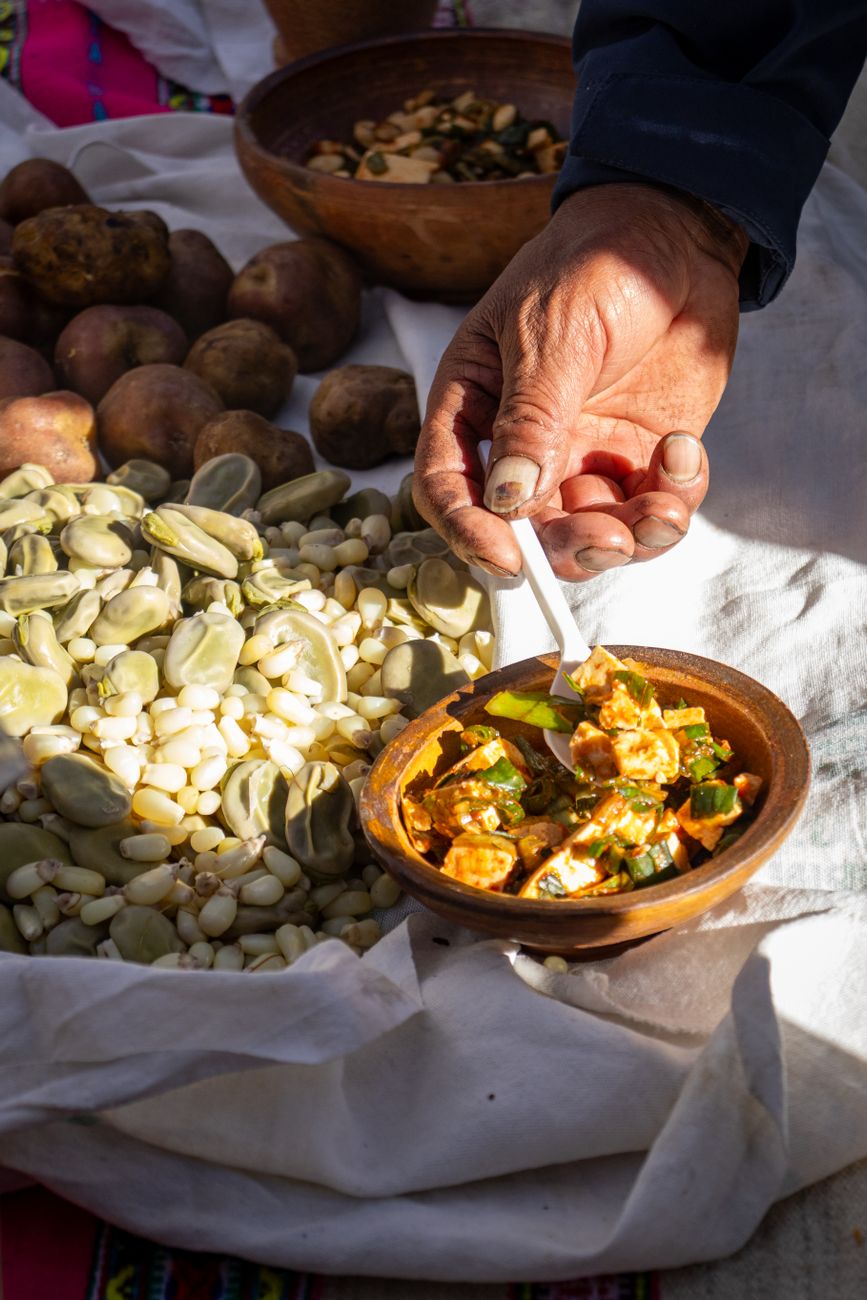
In the village of Amaru, indigenous Quechua farmers preserve ancestral varieties of potatoes—some purple as amethysts, others speckled like river trout. Through freeze-drying practices called chuño, which expose harvested roots to freezing nocturnal mountain winds followed by scorching midday solar radiation, crops are naturally preserved for years without refrigeration.
Modern Culinary Alchemists
Pioneering culinary laboratories near Urubamba are cataloging native clays (chaco), river algae (cushuro), and wild mountain herbs like muña and huacatay. Dining here is an educational journey across vertical ecosystems, connecting the Pacific coastal shelf with the highest glacial moraines.
- Altitude Adaptation: Spend at least three nights in Urubamba (2,870 m) before ascending to Cusco.
- Botany Walks: Join local ethnobotanists through the salt pans of Maras to view mineral crystallization.
- Artisanal Weaving: Visit cooperatives that dye alpaca wool with wild lichens and cochineal.
The Sacred Valley reminds the seasoned traveler that geography is not flat distance, but a magnificent vertical staircase filled with millennia of ecological wisdom.

Mateo Rios
Field Ethnographer & Travel Journalist
Commission an Andean Cultural Journey
Experience private lodge circuits and indigenous culinary exchanges with 111111 curators.
Contact Our Andean Desk